
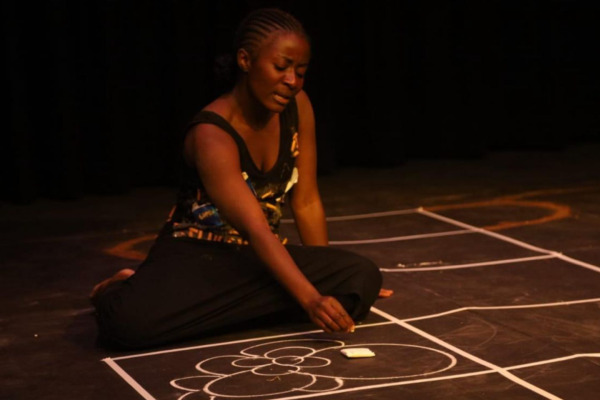
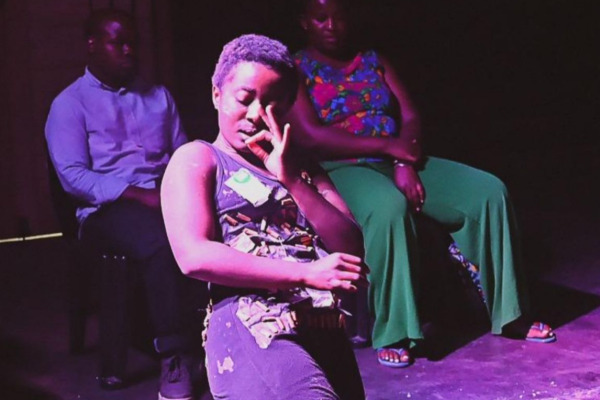
Mwana KuChema is a haunting and emotionally charged township drama that follows Thando, a teenage girl navigating the harsh realities of abandonment, identity, and substance abuse. Raised by her grandmother and uncle in a working-class South African township, Thando grows up burdened by unanswered questions about her parents particularly her mother, Buhle, who remains emotionally distant and detached from her life.
The play unfolds through a fragmented structure that moves between past and present, memory and reality. In the present, Thando exists on the margins of society, addicted, isolated, and judged by the very community that raised her. Through poetic monologues and street encounters, she reveals a deep internal struggle marked by pain, confusion, and a desperate longing to belong.
As the narrative shifts into the past, the audience is introduced to a younger Thando playful, innocent, and yearning for connection. It is here that the roots of her emotional world begin to take shape. Her uncle provides moments of flawed care, while her grandmother attempts to hold the family together through silence and protection. However, the absence of her mother becomes increasingly significant, creating a void that shapes Thando’s sense of self.
The emotional core of the story lies in the revelation of Buhle’s past. Once a promising young woman with dreams of becoming a model, Buhle’s life is shattered by a brutal act of sexual violence on the night of her success. The trauma of that experience leaves her emotionally fractured and unable to connect with the child born from that violation. Her silence becomes both a shield and a prison protecting her from reliving the pain, while unknowingly passing it on to her daughter. As Thando grows older, the weight of rejection, poverty, and unanswered questions pushes her toward substance abuse. Drugs become her escape a way to numb the pain, silencethe questions, and temporarily disappear from a reality she cannot bear. Her addiction is not portrayed as a moral failure but as a symptom of deeper emotional wounds and systemic neglect.
The turning point of the play arrives with the death of her grandmother the only stable source of love and grounding in Thando’s life. In her final moments, the grandmother reveals the truth about Thando’s origins, exposing the hidden trauma that has shaped both mother and daughter. This revelation shatters the fragile emotional structure that Thando has built to survive. Faced with grief, truth, and a lifetime of unresolved pain, Thando spirals further into despair. Yet within moments of human connection, particularly with her former boyfriend there are glimpses of possibility, forgiveness, and self-recognition. These fleeting moments suggest that healing, though distant, is not entirely unreachable.
Mwana KuChema is ultimately a story about inherited pain, silence within families, and the human need to be seen, loved, and acknowledged. It asks urgent and necessary questions: What happens to a child who grows up without emotional refuge? How do we confront the wounds we did not choose? And can cycles of trauma ever truly be broken?
Production Credits
Cast: Nomsa Myth
Writer/ Director: Linda WaKa Shabangu
Stage Manager: Given Mpho Kgasago
About the Artists
Nomsa Myth Tavarwisa is a South African actress, stage manager, dancer, and facilitator whose multidisciplinary practice uses performance as a catalyst for social dialogue and change. She holds a BA in Arts and a 2-year certificate from the Market Theatre Laboratory, where her training grounded her in both classical andcontemporary performance methodologies.
Her work spans theatre, television, corporate performance, and community arts, focusing on amplifying marginalised voices and addressing urgent social issues.
Nomsa is stage manager and actress in Kidding, an award-winning production that interrogates social challenges in South African high schools, including bullying, identity, and systemic inequality. Her TV credits include e.tv’s long-running soapie Scandal!, where she reached national audiences, and Season 11 of The Centre for the Less Good Idea, William Kentridge’s interdisciplinary arts incubator. She was also part of the Thinking in Directing programme, exploring new approaches to staging urgent narratives.
Internationally, Nomsa has toured with a one-hander production to Mozambique, South Africa, and Zimbabwe, using intimate storytelling to highlight the lived realities of people from disadvantaged communities and open conversations around poverty, resilience, and access. She recently performed in Botswana with The Graveland, a politically charged play confronting xenophobia and displacement of African migrants.
Her advocacy work extends to corporate spaces, where she performed in a piece directed by Bobby Rodwell centered on gender-based violence and climate change. Nomsa adjudicates high school theatre festivals focused on socio-economic issues, offering feedback that develops craft and social consciousness. She facilitated a children’s dance with the National Children’s Theatre, creating spaces for youth to explore storytelling.
Nomsa positions theatre as a tool for education, healing, and advocacy, engaging themes of GBV, xenophobia, climate justice, and inequality. Her approach is collaborative, rigorous,Abstract and community-centered, ensuring performance remains accessible and relevant. Through her work, Nomsa Myth Tavarwisa builds a practice that is artistically compelling, artistic and socially necessary.
- Venue: Gymnasium
- Location: Victoria Girl's High School
- Ticket price: ZAR 70.00
- Programme type: The Fringe
- Genre: Theatre
- Duration: 55 minutes
-
Ages:
ALL AGES
- Strong Language
- Adult Themes
- Language: English
- Other Languages: Indigenous