Stop It… Is It Not the Same Gaze? brings together contemporary artists who examine the dynamics of the Gaze through the lens of Sino-African connections. The project asks: How do shifting contexts, curatorial choices, and historical legacies shape the act of seeing? Which narratives are highlighted, and which remain overlooked? How does the interplay of visibility and invisibility affect our understanding of cultural exchange?
Over the past decade, Africa–China relations have intensified across multiple sectors, with cultural diplomacy emerging as a key soft power strategy. This has manifested in a proliferation of art exhibitions and cultural showcases featuring Chinese art in Africa and African art in China, tracing changes in content, curatorial focus, and audience engagement.
Within this context, Stop It… Is It Not the Same Gaze? foregrounds questions of ownership, displacement, and curatorial authority. While not all participating artists’ practices focus on Sino-African engagement, they have been invited to reflect on the act of looking and the assumptions embedded in cross-national exhibitions. The project demonstrates how curatorial selection shapes perception, inviting audiences from multiple contexts to engage in a shared, yet complex, ‘dance of the Gaze.’
Curated by Megan Mace
The project invites you to participate throughout the festival, featuring a screening of Musquiqui Chihying’s film, The Lighting (2021), and to experience Bar, Where is this Place:
26th June, 2:00–3:00pm – Bar Where is this Place?, and Film Screening: The Lighting
30th June, 2:00–3:00pm – Bar Where is this Place?, and Film Screening: The Lighting
5th July, 2:00–3:00pm – Bar Where is this Place?, and Film Screening: The Lighting
Musquiqui Chihying
The Lighting
2021 | 21 minutes
Work commissioned by Han Nefkens Foundation
Light is the spectre that hovers around photographic technologies. From analog to digital and from light-sensitive coating to computer algorithms, light always occupies an irreplaceable place in competing image-making technologies. Throughout the process of negotiating with light, however, it cannot be disputed that white supremacy in this competition has “unconsciously” and “imperceptibly” shaped human prejudices. Jean-Luc Godard was one of the first white persons to (self-)reflect this crisis in the discourses of the former West. In 1977-78, he was invited to Mozambique to assist the development of the country’s image. It was there that he realised that Kodak films – the mainstream of the time – could not be accurately exposed for portraits featuring subjects of dark skin tones. We cannot simply attribute this technical failure to inadequate equipment for the reason that even the most advanced algorithms used today still show a rather high error rate when determining certain groups of people and their skin tones.
The Lighting aims to revisit and clarify the issue of discrimination rooted in technological development and image production through an interdisciplinary exploration. The work comprises three narratives – three professional Togolese photographers explore how to use instruments to compensate for insufficient exposure for dark skin tones; a leading software engineer developing facial recognition algorithms at Taiwan’s MediaTek talks about how they have created a camera algorithm that is highly popular on the African continent; moreover, the artist uses Kodak’s Ektachrome, a popular film in the 70s, to produce a kung fu film in the style of exploitation film, using images of the famous Black martial art film star, Jim Kelly, in Bruce Lee’s movies in the 70s. The work is also interlaced with an animated Bruce Lee as the narrator trained by facial motion capture and a speech recognition algorithm.
Bar ‘Where is this Place’:
Need a drink? Tell us your thoughts…
Artist Biography
Daoguang Wen
Daoguang Wen was born in 2001, in Sichuan, China. Currently he studies at Central Saint Martins for an MA in Contemporary Photography: Practices and Philosophies. Daoguang Wen treats the body as a primary material, working across photography, performance, and sculpture, his practice focuses on spiritual predicament, bodily ritual, erotic, and systems of bodily distribution.
Influenced by Chinese folk culture, he reflects on and reinterprets established formal languages within traditional culture as well as ritual experiences embedded in everyday life. Rather than reproducing them as symbols, he transforms them into structures that can be operated, activated, and inhabited. His recent work explores the expressive potential of materials such as wood, xuan paper cuttings, and wax in relation to desire and the distribution of bodies.
His practice does not propose solutions of liberation; instead, it continually exposes bodily conditions that appear natural yet are fundamentally violent, allowing bodies, relations, and impulses that cannot fully exist within public discourse to remain suspended within the structure of the work.
Past exhibitions include:
I Walk Through The Night, Monere Lab, Chengdu, China
2024, "Plant-Human" Art Market, Chengdu Times Art Museum, Chengdu, China
2025, BUT, THERE ARE ALWAYS THOSE WHO ARE YOUNG:THE 6TH 1839
PHOTOGRAPHY AWARD, Chengdu Contemporary Image Museum, Chengdu, China
2025, Similar Strangers, The Good Rice Gallery, London, UK
2025, Day Dream:Halfway Between Here and Not, Unihood ×2&Temperature Home, London, UK
2025, Plato's Rave: Magnefire, ST George Garrison Church, London, UK
2025, Toast t o the Void, Plant Room, London, UK
2025, Omnicompressant: A 2D Manifesto, The Good Rice Gallery, London, UK
2026, Copy, Transfer, Transform, The Old Waiting Room, London, UK
Huang Lu
Installation Artist | Eco-Artist | Founder of WAWOO
(Born in Sichuan; Currently lives and works in Chengdu)
Huang Lu is a contemporary installation artist and eco-art creator from Sichuan, China.
Her works center on the deconstruction and reconstruction of botanical materials and mixed-media. Characterized by an organic and sculptural aesthetic, her work integrates three-dimensional forms with their surroundings, employing a contemporary lexicon to articulate both public nature and space. Huang is also deeply committed to environmental sustainability, incorporating up-cycled materials into her creations, and continues to explore the contemporary expression of Intangible Cultural Heritage techniques within modern art.
She has staged two solo exhibitions: Live and Life, Chengdu (2020) and Dreams Dance in the Ashes, Shanghai (2023).
Huang’s work has been featured and interviewed by major media, including Xuexi.cn, Tencent News, NetEase, etc. Her creations have been featured in magazine <FusionFlowers>, and held in the permanent collection of the China National Arts and Crafts Museum. Recognized for her cultural contributions, she was named the "Ambassador for Intangible Cultural Heritage" by Guangzhou Radio and Television. She also maintains extensive collaborations with leading brands and major real estate developers.
Kombo Chapfika
Kombo Chapfika is a multi-disciplinary artist, born and raised in Harare, Zimbabwe. He studied in Atlanta, GA. USA (BA.Economics 2006). A mostly self-taught artist, he believes art transcends any singular medium and that each discipline informs the other. He has worked in animation, advertising, broadcast, web development, and fine art. This range has been pivotal to developing his artistic practice and creative direction.
Chapfika's work explores the mutation of contemporary African culture as it adapts to modernity, and technological inter-connectedness. Curiosity, experimentation, and social commentary are central to his creative process.
He is interested in the interplay of technology and culture. How the tools we use reshape us. This theme has crystallised as he becomes more aware of his own complex relationshipwith technology and all its psycho-social and physical effects. It's a topic which touches on the intimately personal, all the way to the global and inter-generational. ‘My hybrid aesthetic echoes my personal journey, the ongoing cultural remixing brought on by globalisation and mobility. I create art which expresses the immense potential and current dire straits of Zimbabwe, and Africa at large.’
He recently completed a seven month Fellowship at Akademie Schloss Solitude in Stuttgart, Germany, and was part of the Zimbabwe Pavilion at the 2024 Venice Biennale.
Li Shuangqiang
Li Shuangqiang (b. 1992, Dandong, Liaoning Province) is a Beijing-based artist. Li is a member of the Chinese Artists Association, and is currently studying for a doctorate at the Central Academy of Fine Arts in Beijing. He received a master's degree in printmaking from the Central Academy of Fine Arts in 2021, and graduated from the Department of Printmaking of the Central Academy of Fine Arts in 2016 with a bachelor's degree. He is represented by SWANFALL GALLERY.
His practice spans multiple media, including copperplate etching, watercolour, acrylic spray, and oil painting. Far from being mere formal exercises, his works are grounded in systematic research and function as processes of translating thought into visual form. He has participated in various exhibitions including; Mall Gallerics (Moor Museum, London) THROUGH THE LOOKING GLASS/VISION Exhibition, 2023 ;CRYPT GALLERY OBSCURA - Shadows and Whispers Exhibition, London, 2023, and The 4th Biennale of the International Academy of Printmaking, 2022.
Musquiqui Chihying
Musquiqui Chihying (b. 1985, Taipei) is a visual artist and a filmmaker who resides and works in Taipei and Berlin.
His artistic endeavors explore the entanglements of post- and trans-modernity in the Global South, postcolonial identity, and the politics of technology. Working with moving images, sound, and music, he develops narrative vocabularies that unsettle dominant regimes of representation and propose alternative perspectives on the interconnectedness of human and ecological systems. His current research engages with Afro-Asian maritime histories, from the circuits of indentured labour in the Indian Ocean to contemporary infrastructural and smart-city projects led by Chinese technology corporations in Africa. Through these inquiries, Chihying situates aesthetic practice as a critical site for rethinking transoceanic exchange, colonial legacies, and planetary modernity.
Musquiqui Chihying's works have been exhibited in numerous international art institutions, including HKW Haus der Kulturen der Welt in Berlin, Migros Museum of Contemporary art in Switzerland, Art Sonje Center in Seoul, Centre Pompidou in Paris, Power Station of Art in Shanghai, UCCA Center for Contemporary Art in Beijing, MoCA Museum of Contemporary Art in Taipei, among others. His film works have been screened at various film festivals, including Locarno Film Festival in Switzerland, Berlin International Film Festival in Germany, Rotterdam Film Festival in the Netherlands, and the Taipei Golden Horse Film Festival. In 2023, he was awarded the Tung Chun.
Pu Yingwei
Pu Yingwei (b. 1989) lives and works in Beijing, China. As an active contributor to the new generation of political conceptual art in China, he critically engages with socialist art genealogy. Pu Yingwei dedicates his work to articulating the changes in China’s identity amid globalization and exploring the deeper impact of China’s modernization and development model on global patterns through cross-cultural narratives. His practice employs various media, including painting, video, design, writing, and lecturing. He has developed a 'new internationalist' artistic language based on his perception of Eastern civilization. In recent years, Pu Yingwei has deepened his global engagement, traveling to Eastern Europe, Africa, Central Asia, Southeast Asia, the Americas, and the Caribbean, including regions like the Balkan Peninsula and Ukraine, which are currently in conflict.
Pu received his BFA from Sichuan Fine art Institute in 2013, DNSEP (MFA with Félicitation du jury) from École Nationale Supérieure des Beaux-Arts de Lyon in 2018. He has been the recipient of several awards, including the John Moores Painting Prize, the Golden Hibiscus Award for Photography, and the International Awards for Art Criticism Prize (IAAC) for his writings. Pu has been recognized in prestigious lists such as Forbes China Contemporary Young Artists of the Year, Gen. T Asian Emerging Pioneers list, China Art power 100, and the HuaYu Youth Award, among others. He also received the TAG New Contemporary Art Prize, the Jimei Arles Discovery Reward, Porsche “Young Chinese Artist of the Year” Award, and was named the first “FT Chinese Artist of the year” by Financial Times China.
Pu Yingwei’s works have been exhibited at numerous prestigious venues and institutions both domestically and internationally, including the Staatliche Kunstsammlungen Dresden, the Walker Art Gallery (Liverpool), the 13th Shanghai Biennale, the Caen Film Festival, Nouvel Institut Franco-Chinois (Lyon), the National Art Museum of China, the Power Station of Art in Shanghai (Shanghai), the OCAT Museums, and the Taikang Space (Beijing). His works are widely collected by significant institutions and collections such as the MAC-Lyon, KADIST, the Groupe Emerige (France), the White Rabbit Gallery (Australia), the Guangdong Museum of Art (Guangzhou), the He Art Museum (Shunde, China), the Star Museum (Shanghai), the Song Art Museum (Beijing), Sifang Art Museum (Nanjing, China), the Longlati Foundation (Shanghai), and the ASE Foundation (Shanghai).
Wang Xuehan and Liu Mingze
Wang Xuehan (b. 1999, Shenyang) and Liu Mingze (b. 1996, Yichun) are a collaborative artist duo based in China. Both hold Master’s degrees in Experimental Art from Luxun Academy of Fine Arts. Their interdisciplinary practice centers on dynamic mechanical installations and interactive sculptures, defined by a distinct rational aesthetic. Rather than creating mere visual spectacles, the duo employs the inherent logic of machinery to articulate their observations of the world, inviting audiences to perceive reality through a fresh, critical lens.
Their practice has been showcased in pioneering exhibitions at the intersection of art, technology, and urbanism. Their portfolio includes major international platforms such as the UABB Shenzhen-Hong Kong Bi-City Biennale (2025) and the Korean A&DT Exhibition. Furthermore, they have presented significant projects at prominent institutions, including Robot Art Era at Beijing 798CUBE, the Star 100 Youth Art Season at the Beijing Xingdi Art Center, and How to Deduce Problems at Shanghai Howland Art Museum.
Zhang Mao
Born in Anhui Province in 2000. Graduate student of the School of Experimental Art and Science and Technology of the Central Academy of Fine Arts. Now living in Beijing Zhang Mao’s works mostly use ready-made materials for media creation, and the types of works are dynamically installed. Mainly, and involves images and behaviors, etc. Excavating texts on myths, history, religion and other themes. On the basis, use poetic “low technology” to explore the extension and integration of people’s perception of nature.
It emphasizes the general characterization of personal emotions on natural objects, as well as the illusion of mechanical virtuality.
2025 “Most Outstanding Work: Rob’s Choice” Young Artist of the Year (China).
Finalist entries for the 2nd C-IDEA Design Awards (China), 2019.
2020 11th New Star Art Award: List of Top 100 Featured Artists (China)
List of shortlisted artists for the 9th Tomorrow Sculpture Award (China), 2021.
2022: Best Experimental Film Award at the Second MEGA Creative Media Festival (China).
2022: Third Edition of the LIGHT IN New Media Art Competition – List of Selected Artists (China)
List of shortlisted artists for the inaugural NAFI FUTURE · Star Selection Program (China), 2023.
Credits
Curator:
Megan Mace
Artists:
Daoguang Wen
Huang Lu
Kombo Chapfika
Li Shuangqiang
Musquiqui Chihying
Pu Yingwei
Wang Xuehan and Liu Mingze
Zhang Mao
Image Credits:
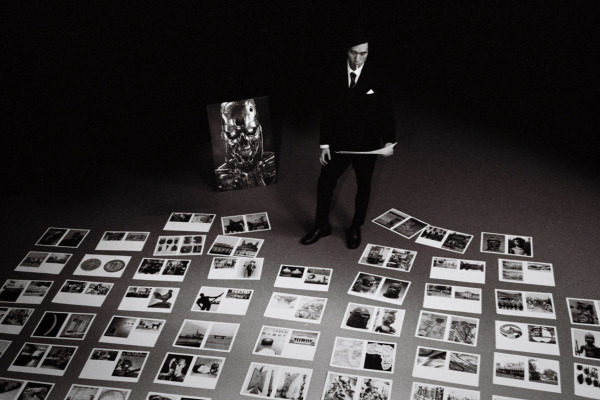
Image One: Musquiqui Chihying | The Sculpture | 2020
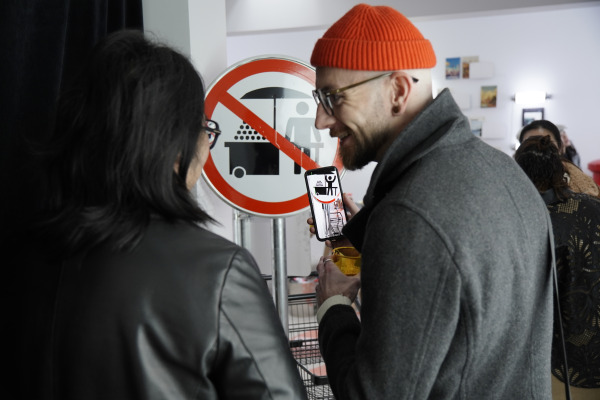
Image Two: Kombo Chapfika | No Vendors | 2024
- Ground Floor Annexe
- Monument Building
- Daily during the Festival 09:00 to 17:00
-
Daily entry to the exhibitions is free. The scheduled walkabouts have a minimal cost and booking is essential.